Thursday, August 09, 2012

Worshiper Renewal

"I like my song writers good and dead!" That’s what I heard someone say in response to some of the contemporary songs we were beginning to sing. I wanted to say that they also preferred their worship "good and dead," but I didn't. It’s OK to like old songs. I suspect that our “Anceint of Days” God sees all our music as pretty much "new music."  The God who is "yesterday, today and forever," sees everything as pretty much contemporary. Sure, I prefer contemporary music, but I don't blame that on God.

But then again, Psalms 149 (our reading today) begins with the call to "sing to the Lord a new song; his praise in the assembly of his faithful people.” There you have it in black and white—God loves contemporary praise. Maybe not. The call to "sing to the Lord a new song" appears six times in Psalms, once in Isaiah and twice in Revelation. And it is generally used to reflect a new order of things following God’s deliverance.

  • Sometimes it appears as a general call to worship God, "Sing to him a new song; play skillfully, and shout for joy." (Psalm 33:3)
  • But it is also used following God's deliverance, "He lifted me out of the slimy pit, out of the mud and mire; he set my feet on a rock and gave me a firm place to stand. He put a new song in my mouth, a hymn of praise to our God." (Psalm 40:3)
  • In Isaiah, it is used of the restoration of Israel, "Sing to the LORD a new song, his praise from the ends of the earth" (Isaiah 42:10)
  • In Revelation, praise in heaven is given in a new song, "And they sang a new song before the throne and before the four living creatures and the elders." (Revelation 14:3)

Basically, "sing a new song" is a call to worship God in a renewed way. When we come to see God and understand all He has done for us, then there is a renewed impetus to worship Him. Our hearts overflow, and we throw ourselves in praising Him for what he has done. And the way scripture puts that is that we “sing to the Lord a new song.” The call in scripture to sing a new song is a call for "worshiper renewal."

The psalm says a lot about worship, but notice how it ends, "May the praise of God be in their mouths and a double-edged sword in their hands" (v. 6). Being the people of God meant that Israel executed God’s judgments against the nations; they served God with a sword in their hand. But don’t get bogged down in the details; the point here is service. After calling Israel to a renewed worship of God, the psalmist then reminds them to serve. With the praise of God on their lips, they were then led to serve God. There is a connection between the life of worship and the life of service. What we do when we assemble as a church is connected to the life of service we lead when we are not assembled. The two aren’t the same, but they go hand-in-hand. If we give God exuberant and heartfelt praise while we are here, then we are better able to serve when we leave.  On the other hand, if we serve God by serving others in our daily lives, then we are more motivated to worship with the saints.

Here is the nexus between worship and service. Israel was to live with God's praise on their lips and the sword of service in their hands. They could not do one without the other. The same is true for us. We must combine hearts that give God praise and hands that give him service. We can't do one without the other. If we fail to sincerely and exuberantly worship God, then we will not be as motivated to serve God. In the same way, we aren't serving God as we should in our daily lives, then we won't be motivated to worship Him. Worship renewal is not tweaking the externals to make our assemblies more exciting or relevant (or more traditional and faithful to the "old paths").  We are to continually renew our hearts as we encounter God in a worship that prepares and inspires us to go out into His world and serve Him.

Wednesday, July 25, 2012

To Hell in a Handbasket...

From our “to-hell-in-a-handbasket” department... It was reported today that the Damson Dene Hotel in England’s picturesque Lake District was replacing its traditional Gideon Bibles in each room with a copy of the popular “adult” (“adult” as in “pornographic”) novel Fifty Shades of Grey.”  The hotel, which was ironically bought from a Methodist group several years ago, decided that having Gideon Bibles around was “wholly inappropriate” in our postmodern, secular society.  What better way to be “appropriate” than to provide free of charge a widely popular smut novel?  Jonathan Denby (not Denbigh), the hotel’s owner remarked, “Everybody is reading ‘Fifty Shades of Grey,’ we thought it would be a hospitable thing to do, to have this available for our guests, especially if some of them were a little bit shy about buying it because of its reputation.”  But then Denby quickly added that he himself had not read the book.  Well, maybe now he can get a room and read it.

We do live in a postmodern, post-Christian, secular society.  One of the things that means is that we can forget the nod and special treatment that our culture once gave the church.  When I was a kid (granted, a long time ago), we didn't have school events on Wednesday nights because that was church night for many of the students and the school didn't want to interfere.  Well that has gone the way of the dodo bird, hasn't it.  People in our culture no longer just accept the Bible as the “The Good Book.” It is just one book among many.  People no longer describe good manners and helpfulness as “the Christian thing to do.”  In fact, they may be more likely to see waving a hateful sign and telling people they are going to hell as “the Christian thing to do.”  The Christian faith is going to have to compete in the marketplace of ideas with a host of other and conflicting ideas.  And in that marketplace, putting a pornographic novel in the nightstands of hotels is just as likely as putting a Bible there.

So how are we going to get people to take the Christian faith seriously today?  There is only one way.  And it’s not wringing our hands and shouting “Woe is we” as we complain about how our society is going to hell in a handbasket.  No, what Christians have to do today is to stop feeling sorry for ourselves and go out and live the joyous, triumphant, expectant and praise-filled life that Christianity was and is designed to be.  We are to reflect and replicate as best we can the life and teaching of the most amazing, gracious, loving, accepting and positive person the world has ever produced… because He was the power that produced the world.  The way we get people to take faith seriously today is to live it as it was meant to be lived. 

Oh sure, people died in the arena for doing that in the first century.  So what’s your point?

Tuesday, July 24, 2012

Idlewild 2012

Another year at Camp Idlewild is in the books. Every year I decide that I'm getting too old for such things; in fact, this year I had decided that this was my last. But then God saw to it that I had 24 middle-schoolers (12 boys and 12 girls) who were cooperative, enthusiastic, good-natured, well-mannered and just plain fun... how could I go out with a group like that? Also, I had a crack staff of volunteers that made the week smooth as silk. And maybe a redesigned staff quarters (that we nicknamed "The Taj Mahal") made "roughing-it" at camp not really rough at all. It was a great week; thanks to all the campers and staff that made it so. Here is a sampling from the week--


The theme this year was "Heroes of the Faith." The classes each day looked at different Old Testament characters who had to trust in God during difficult times. My favorite moment from class was when Keri relabeled a can of tuna fish as "Cat Food" and then challenged the boys to try it (which, surprisingly, they fought for the chance to do). Point: Job (or Moses or one of the other heroes of the faith) had to endure some things that were yucky on the outside but they trusted God to get them through it (the boys were disappointed when they found out that the cat food wasn't really cat food). The winning cabin skit (from Boys Cabin #1) retold in Idlewild fashion the story of Moses, one of our heroes of the faith--


In the evening devotionals, we looked-- not at God's heroes from the Old Testament, but his rules. The kids learned the Ten Commandments in order and we looked at several and tried to make applications to their lives. The kids were super attentive during these 30 minutes at the end of a long, tiring and hot day; I sometimes had a hard time getting through all my material because of all the (mostly) good comments they were making. Here is Girl's Cabin One reminding us of what Jesus really wants from us--


Two weeks before camp started, I had no male counselors (always the hardest position to fill); I ended up with four and let one of them stay home (he was going as a counselor the next week and needed to conserve his energy). Thanks to Ethan Bynum, Jerrod Tatum and Will Respess for stepping up... and keeping Roger and I out of the cabins! Here is Girls Cabin #2 reminding us that we need to be careful what we hope for and focus on things that last--


The weather was HOT, hitting 100 once and hovering nearby most of the week. But the weather was for the most part dry, which made it easy to stay on schedule. As great as the camp facility is (and it was in great shape this year-- the pool was perfect and the new staff quarters and girls bath house were great), there is really not much to do at camp when it rains. We did have a real frog-strangling gulley-washer the last afternoon and evening, but we got through it. Here is Boys Cabin #2 telling us what to do and not do in a thunderstorm--


My one request from the board for a facility change would be to re-position the volleyball court back under the trees in the shade. It was too hot much of the time on some days that physical activity was dangerous. But it seemed 15 degrees cooler in the shade. Back in the olden days, the volleyball court under the trees served as the functional center of the camp-- when there wasn't anything organized going on, the kids played volleyball under the trees where it was cool )and the net was lower and the court smaller than regulation)... or they say on the benches around the volleyball court and talked. I would like to bring that back.

It was a great week. If you didn't get a chance to go to camp this year, start making plans for next year. I am.

Friday, July 06, 2012

I Don't Have a Clue!

One of my teachers in college used to tell us never to “preach your doubts.” This is similar to warning trial lawyers never to ask questions in court that you don’t already know the answer to. Preachers aren't to raise issues or questions in a sermon for which they have no answers because that will just confuse and frustrate people. Maybe that's why some people think that preachers know everything about the Bible; we aren't allowed to bring up the multitude of questions for which we have no answers.

Does that same principle apply to blogs? Is it OK to raise questions in my blog that I don’t have answers for? Well, that is precisely what I'm going to do this morning. Because I don’t have a clue in what is going on in our daily Bible reading from 2 Samuel 24 and 1 Chronicles 21. Here’s my summary of the story—
David angers God by conducting a census of fighting age men. David finally realizes (too late) that this was a bad idea and repents and God offers David his choice of punishments—3 years of famine, three months of fleeing from enemies, or three days of plague. David chooses the plague and 70,000 people died… and David realizes he made the wrong choice.
The story ends with David offering sacrifices of repentance on the threshing floor he bought from Araunah, the site upon which Solomon would later build the Temple (2 Chr 3:1). So what’s the problem with this story? From my limited and perplexed perspective, there are plenty of questions here.

  • First, we aren't ever told why this census was such a horrible sin. Moses had been commanded to do that very thing in preparation for the conquest of Canaan (Exo 20:12). Maybe the census shows a lack of trust in God?  Later David resists another census because “the LORD had promised to make Israel as numerous as the stars in the sky” (1 Chron 27:23).  But we aren't told.
  • Second, who was it exactly that incited David to take this census? In 2 Samuel, the idea seems to come from God, “the anger of the LORD burned against Israel, and he incited David against them, saying, “Go and take a census of Israel and Judah” (24:1). In 1 Chronicles, the idea comes from Satan, “Satan rose up against Israel and incited David to take a census of Israel” (21:1).  Sure, David made the decision, but did the temptation come from God or Satan?
  • Third, Joab (himself no spiritual giant) instantly knew that this census was a bad idea and tries to talk David out of the plan. OK, that a little our of character for him, but then why in 1 Chron 27:24, is it Joab that begins his own effort to count the fighting men?
  • Fourth, does the punishment fit the crime? David commits adultery and murders his faithful servant to cover up that sin, and the punishment was the death of a child and constant turmoil within David’s family. But here David counts his army and the punishment is 70,000 deaths of innocent and ignorant people? Maybe it’s just me, but something seems a little out of kilter there.

God is God and God is All-Sovereign. One of the fringe benefits in being God is that you don’t have to explain yourself to anyone.  Maybe the point of stories like this is to remove the fiction that we have allowed ourselves to buy into that we can reduce the Bible to neat and simple stories that fit nicely together with one another and with our theological understandings. God is too massive for us to understand, even in these stories that He has left for us. These stories speak to us of the One who lives in unapproachable light, and thus they sometimes jostle against one another in ways that don’t fully make sense to us. Should that surprise us? Or should it rather surprise us if those stories fit together too neatly and nicely so that we would wonder if they were really about God?

Thursday, July 05, 2012

Second Verse Different from the First...

Our reading for today from Psalm 95 should sound very familiar to many of us. Not because we read the Psalms so much that we have them memorized but because we sing them so much we have part of them memorized. Several of the praise songs we sing from time to time come from Psalm 95. In fact one of them is cleverly titled "Psalm 95" (Music by Jason Hill, Dick Dalzell and words by God)
Come, let us sing for joy to the Lord
Let us shout aloud to the Rock of our salvation.
Let us come before him with thanksgiving (and extol)
And extol him with music and song...
Actually that song is Psalm 95:1-5 word for word out of the NIV.  So you might not like the song, but it's hard to complain much about the lyrics! The same is true for the song "Come Let Us Worship and Bow Down" by Dave Doherty. He picks up where Hill and Dalzell leave off in Psalm 95:6-7a
Come let us worship and bow downLet us kneel before the Lord, our God our Maker.For He is our God,And we are the people of His pastureAnd the sheep of His hand,    And the sheep of His hand.
These two songs are very different (the first is way uptempo, the second is slow and reflective) but they come (almost) word for world from Psalm 95. They also share in common the fact that ignore the second verse and stern warning of the Psalm--
Today, if only you would hear his voice,8 “Do not harden your hearts as you did at Meribah,
as you did that day at Massah in the wilderness,
9 where your ancestors tested me;
they tried me, though they had seen what I did.
10 For forty years I was angry with that generation;
I said, ‘They are a people whose hearts go astray,
and they have not known my ways.’
11 So I declared on oath in my anger,
‘They shall never enter my rest.’ ”
So maybe that part of the psalm is just harder to put to music; it is definitely not happy-clappy. But the message of this part of the psalm must be important because that is the part that is picked up and used by the writer of Hebrews... twice (Heb 3:7-11, 4:3).

God is "the Rock of salvation" and we are "the people of his pasture" not because of what and how we sing on Sundays. The stern warning here is not to harden our hearts as Israel did at Meribah and Massah when they complained against Moses because they did not trust God to provide them water in the wilderness. They complained about the hardships of the journey and did not trust God to provide for them. You see, if we really believe that God is our Rock (from where water comes) and that we are the people of his pasture (thus taken care of by Him), then we will not have hard harts and become discouraged by the difficulties of our journey. That generation of Jew did not enter the rest of Promised Land because they didn't trust God on the journey.

It's one thing to sing the praise songs on Sunday. We need to sing them because they remind us of who God is and what God does. But those songs have meaning only if they lead us to trust and obey God daily as we live through the wilderness that can be our lives. We need to sing that last verse of Psalm 95, because that verse is the point.

Wednesday, July 04, 2012

A Hundred Nails in Your Tire?

9 I will praise you, O Lord, among the nations;
I will sing of you among the peoples.
10 For great is your love, reaching to the heavens;
your faithfulness reaches to the skies.
11 Be exalted, O God, above the heavens;
let your glory be over all the earth. (Psalm 57:9-11)

Sometimes we all feel like the service station guy who is the subject of one of those little "true life experience" blurbs at the bottom of the page of Reader Digest.
Shortly after I moved from Alaska to California, one of my studded snow tires went flat. The service-station attendant took one long look, shook his head and said, 'Mister, I don’t know how to tell you this, but you’ve got over a hundred nails in your tire!
Some days your life can feel like your tire has gone flat, and then some days it feels more like you have a hundred nails in it. Life can be stressful, tense, difficult and trying... and those are the good days. Sometimes   we just feel totally overwhelmed. Just like David was in our reading from Psalm 57.

Read verse 4 and you think David is in the jungle surrounded by wild beasts. Read verse 6 and you think David is on the battlefield surrounded by enemies. But read verse 5 and you think David is in church! What gives? David is having a really, really bad day. The superscription suggests that he wrote this while in a cave hiding from Saul. His enemies were literally closing in around him, and so David cries out to God.  (We assume David writes the Psalm later while reflecting back on the case; crying out either in fear or worship is not recommended for those hiding out in caves!)

But something happens on the way to David's lament; his desperate cry for help becomes a deliberate cry of worship. What David needed at this difficult time of life was to know that God was near. And the way that we feel the nearness of God was through worship. So David the persecuted becomes David the worshipper. He first makes the decision to praise (verses 7-8) and then gives himself to praise (verses 9-11).

One thing is clear. David would not have understood the well-intentioned but wrong-headed notion that we sometimes express in our announcements or prayer that in order to really worship, we must  "leave behind the cares and concerns of this world."   Last Sunday, we even sang, "Lay your burden down, every care you carry..."  Do we have to do that before we can worship?  David didn't. He rather brought his cares and concerns to God and praised God despite them and because of them. His need for God because of those burdens drove him to praise God. Worship for David was the conduit that brought him into God's presence for healing and comfort. Maybe there is a lesson there for us. Has you life suffered a flat tire? Praise God!

Wednesday, June 27, 2012

The Bigfoot of the Bible

Every once in awhile, I like to invite a guest blogger to write a post on my blog.  Actually, what I like to do is just find a great blog somewhere and then cut and paste it here.  I like to do that for several reasons.  It's a lot easier than thinking up something new from scratch.  Also "guest blog" come with "plausible deniability."  If somepne doesn't like it, I can just blame the author and claim that I posted it just as an example of the goofy things people write.  And I think it's good occasional to have something deep, well-thought our and helpful on the blog.  Actually some one told me that my blog is both good and original-- unfortunately the part that is original isn't very good and the part that's good isn't original.  (In case your wondering, that line is good... so it isn't original).

I ran across the following article on The Christian Post and thought it was both good and original.  It was written by Greg Stier of Dare 2 Share Ministries.  Obviously, I'm posting it because I like it and I like it because I agree with him.  So, for what it's worth...

The Bigfoot of the Bible
"There will be plenty of people in hell who said the sinner's prayer." That's what I told the host of a nationally broadcasted Christian radio program when he tried to force a reluctant caller to "just say this prayer" to be saved. To the host's chagrin I intervened (and for some reason haven't been invited back since!)  A lot of bad theology is hidden behind the phrase, "Just say this prayer and you'll be saved." Think about these Scriptural realities:
  • Jesus never led anyone through a sinner's prayer.
  • The disciples didn't either.
  • Nor did the Apostle Paul.
The Sinner's Prayer is the Bigfoot of the Bible, talked about a lot, but nowhere to be found. This yakking Yeti doesn't even leave a fake footprint.  Listen to this zinger Jesus shot in Matthew 7:21 about those who think they can just say the right words and be saved, "Not everyone who says to me, 'Lord, Lord,' will enter the kingdom of heaven, but only he who does the will of my Father who is in heaven." And what is the Father's will? Jesus answers that question clearly in John 6:40, "For my Father's will is that everyone who looks to the Son and believes in him shall have eternal life, and I will raise him up at the last day." 
Saying a prayer is not believing in Christ, believing in Christ is believing in Christ. Now, having said that, somebody may be expressing their faith in Jesus in the form of a prayer which is great! But just saying "the magic words" (aka "Lord! Lord!") doesn't save anyone. 
Many, "just say these words" defense attorneys turn to Romans 10:9,10 to make their case, "…if you confess with your mouth, 'Jesus is Lord,' and believe in your heart that God raised him from the dead, you will be saved. For it is with your heart that you believe and are justified, and it is with your mouth that you confess and are saved.' But it's hard for me to believe that, if saying a prayer is essential for salvation, God would confine this command to just one passage of Scripture. And it's impossible for me to believe that, if saying a prayer is required for salvation, that some form of Sinner's Prayers wouldn't be sprinkled across the Gospels and the book of Acts. 
Actually, if you read Romans 10 in context, it has just as much to do with evangelism as it does salvation. Romans 10 is the "How will they hear without a preacher?" passage. Confessing that "Jesus is Lord" in this context was a way of preaching to friends, neighbors and relatives that you were now a follower of Jesus, that you now believed that "Jesus is Lord." This confession was considered heresy by the Jewish community (who believed only the Father, YAWHEW, was Lord) and treason by the Romans (who thought only Caesar was Lord.)   
This controversial confession accompanied public baptism in the closest river or lake and was very public in nature. This public confession of faith identified you as a Christian and steeled and sealed your faith and your fate (which could include being mocked, marginalized or murdered by angry neighbors!)  Believing in our hearts justifies us (declared us righteous in the eyes of God.) Proclaiming with our mouths saves us in the sanctificational sense of the word. In other words, our internal faith saves us from hell and confessing our faith verbally and publicly saves us from a stunted Christian walk. Faith gets us in the kingdom. Confession makes us more like the King because we are boldly identifying ourselves with Jesus! 
All this to say that I have no problem leading someone through a salvation prayer (and I do it a lot!) with this important caveat. I ALWAYS tell the person that saying a prayer doesn't save them, it's just a simple way of expressing their newfound faith in their newfound Savior to their newfound Father. 
No, the Bigfoot of the Bible is nowhere to be found. But what is found is a victorious Savior who died the death that we deserved then rose to offer us the new life we didn't. Let's put our focus and faith in the rock-solid reality of Jesus, not the legends of the mysterious and elusive sinner's prayer. 
If you agree then just say these words outloud to God…(just kidding!)

Monday, June 25, 2012

Accepting Everyone But Not Everything

The Pharisees didn't get it. They could not understand why Jesus was spending so much time with all those "tax collectors and sinners," the untouchable caste of their culture. You see, they believed that sin was something that was "caught," much the same way that one became ceremonially unclean by touching someone or something that ceremonially unclean. So why would any rabbi risk such contamination by eating with someone like Matthew and his collection of tax collectors and sinners? They didn't get it.
Jesus answered them, “It is not the healthy who need a doctor, but the sick. I have not come to call the righteous, but sinners to repentance” (Luke 5:31).
They didn't get Jesus' response either.  They didn't get that  Jesus was including THEM in the number of all those "sick" folks that Jesus had come to seek and save.  Jesus was trying to win everyone—publican and Pharisee alike. You know, given what we know about the Pharisees, we would likely point to all those times that Jesus ate at some Pharisee's house and ask, "Why does he spend so much time being chummy with all those Pharisees?" Jesus was trying to win everyone-- holy and unholy alike.  The Pharisees didn't get that they needed a doctor.

And I wonder if we have forgotten that the tax collectors needed the doctor too. Jesus didn't come to just call sinners (Matt 9:12). Jesus came to call them to repentance (Luke 5:31). No, Jesus never declared war on the sinners of his culture.  He never carried signs proclaimed God hates this or that sin or sinner.  Jesus was called the friend of sinners" (Matt 11:19), but He also called sinners to repentance.  Jesus accepted everyone, but he didn't accept everything. He accepted people and sat around the table with them so he could encourage them to repent.  Jesus remarked about how different was the public perception was between himself and John the Baptist (again, Matt 11:19), but their message was the exactly same, "Repent, for the kingdom of heaven has come near" (Matt 3:2, 4:12). Jesus didn't just accept sinners; He also called them to stop sinning (John 5:14, 8:11).

I wonder if in our rush to accept everyone (like Jesus) that we have failed to call everyone to repent (like Jesus). Kenda Creasy Dean in here book Almost Christian has coined the acronym “MTD.” She claims the actual religion taught in many (most) American churches today is not Christianity but Moralistic Therapeutic Deism. Moralistic because it helps us to be basically good people. Therapeutic because it helps us to feel better about ourselves. And Deism because God largely stays out of our way. Dean refers to this as "pasteurized" Christianity where all the "transformative elements cooked out." In our rush to accept everybody we have accepted everything.

Christianity is about discipleship, about picking up the cross of Jesus and following him. It is about living as a counterculture in a world that is not our own as we look for "a city with foundations, whose architect and builder is God" (Heb 11:20). It about following Jesus "outside the camp, bearing the disgrace that he bore" (Heb 13:12). It is about standing against the prevailing values and ideals of this world because they stand opposed to the values and ideals of the kingdom of God.

We must accept everyone, but we cannot accept everything.  We must call everyone (including ourselves) to repentance.

Tuesday, June 12, 2012

Church: Are We Visiting or Living?

Lord, who may dwell in your sanctuary?
    Who may live on your holy hill? (Psalm 15:1)
There's a old saw about a plane that began to crash. Someone screamed, "Quick, someone do something religious!" So they passed the hat! This might be a sad commentary on the way that many non-church people see church. But maybe it also is a sad commentary on how many Christians feel as well. Because we understand the importance of worship and "going to church," we may come believe (or maybe act like we believe) that the essence of religion are the things that we do when we are at church. As long as one is a member of the right church and does the right things when they are at church, then they are serious about religion.

Psalms was the worship manual of ancient Israel and the hymn book of the early church. So when David writes a song asking, "Lord, who may dwell in your sanctuary," we need to read it in the context of worship. True worship and true worshippers come from the context of a whole life lived in the presence of God. David does not ask, "Who may visit your sanctuary;" he asks "Who may live there?" In Psalm 15:2-5, he describes the kind of worshiper that God is seeking--
2 He whose walk is blameless and who does what is righteous,
who speaks the truth from his heart
3 and has no slander on his tongue, who does his neighbor no wrong
and casts no slur on his fellowman,
4 who despises a vile man but honors those who fear the Lord,
who keeps his oath even when it hurts,
5 who lends his money without usury and does not accept
a bribe against the innocent.
The essence of true worship for David was to be found in true worshippers who brought true hearts and lives before God. The spiritual and true worship that Jesus tells us the Father is seeking (John 4:23-24) comes from lives of holiness and integrity lived before God. David concludes, "He who does these things will never be shaken." The way that we live today at work, with our families and before the world is in essence preparation for the worship that we will share together on Sunday.

Friday, June 08, 2012

What Do We Stress?

Wednesday night we spent some time discussing our tendency to play religious games while missing the whole point of discipleship. We looked at Mark 12 and how the Jewish religious leaders tried to "game" Jesus into saying something they could use against him. They sent a combined delegation of Pharisees and Herodians to ask him about paying taxes so that no matter what answer Jesus gave, half the crowd would be angered. Then some Sadducees asked him about the resurrection, using a concocted hypothetical story that had probably been stumping the Pharisees for years. Finally, a legal expert stepped up and asked Jesus a question about the law. The point we might miss is that these expert religious practitioners were playing games of trivia pursuit after already deciding to kill Jesus (Mark 3:6, 12:12). Playing religious games while missing the whole point of religion-- literally missing God Himself!

Do we play religious games today while missing the point of discipleship? Well, there are some things that we do seem to emphasize much more than does God. For example, while the New Testament talks about "the assembly" of Christians, the details are never really fleshed out with any detail at all. But that's OK because we are more than willing to supply the details. Think about all that has been said and written (and shouted) about the right style, form and format of church music when the New Testament barely has enough material on music to make a good paragraph. We seem to be much more interested in how we do worship than God is.

On the other hand, God seems so obviously interested in some things to which the church barely gives lip-service. How much does the Bible say about unity, peace and harmony among believers? But then we'd rather fight over church music!

God goes to great lengths to emphasize unity. Look at the rather unique imagery of Psalm 133 (today's daily Bible reading) where David extols the the beauty of fellowship and unity. He affirms that it is good and pleasant when God’s family lives together in peace and harmony. This little Psalm is dripping (pun intended) with metaphors that emphasize this message of harmony. There are two types of anointing here that stress the sweetness of unity:
  • Anointing of the Priest. Here the oil runs down Aaron’s beard and onto the collar his robe, joining the priest and the priestly robe. Though the sweetness of the oil isn't specifically mentioned, that seems to be the imagery here.

  • Anointing of the Mountain. Here the dew of Mt. Hermon, the highest of the mountains in Palestine and one known for its moisture, falls on (and thus anoints) little Mt. Zion, the hill upon which Jerusalem sits. So the two mountains are joined by the anointing.
Maybe the focus of the Psalm is seen in the second couplet of verse 3,  “For there the LORD bestows his blessing, even life forevermore.” It is God who takes the initiative to make unity possible. It is on Mt. Zion, at the Temple, in the presence of God that this blessing of unity is given. This sweetness of harmony is not possible when based solely on human power alone. Just think about how well people get along today in the region of Mt. Hermon and Mt. Zion! It was God who made unity possible in Israel. It is God who makes unity possible today. And that is Paul’s point in Ephesians 2:17—
For he himself is our peace, who has made the two one and has destroyed the barrier, the dividing wall of hostility.
Not only does God demand unity, He is working to bring it about in us. If we keep ourselves close to Him, then we will also stay close to all others who are seeking Him. When we come closer to the cross, we also come closer to each other! That’s why unity is no optional extra for those seeking the face of God. The closer you get to Him, the more you bump into to others seeking to get close to Him as well!

Thursday, May 31, 2012

The Point of Our Worship

Most of us probably realize that a great number of our praise songs come from Psalms. What we might not realize is that many of those songs come from the psalms of lament. The laments are cries to God for help or justice in the middle of crisis or confusion, but they usually end with a statement of praise. Our songwriters clip the praise sections and use those for songs while ignoring the greater context of lament:
  • We sing "As the deer pants for the water so my so longs after you." But if we were going to really sing Psalm 42, we’d continue, “My tears have been my food day and night, while people say to me all day long, ‘Where is your God?’” That’s not nearly as catchy, is it?

  • We sing “I will praise you, Lord, among the nations; I will sing of you among the peoples. For great is your love, reaching to the heavens; your faithfulness reaches to the skies.” But if we sang the rest of Psalm 57,  we'd also sing "I am in the midst of lions; I am forced to dwell among ravenous beasts." Again, not nearly as happy-clappy.
Psalm 73 (our reading for today) is also lament, a struggle for faith despite the obvious injustice of the world. Asaph begins with a statement of faith, "God is good to Israel, to those who are pure in heart" (73:1). That is what he says, but the problem is that this is not what he feels. Asaph is going through a faith crisis, hence the lament of the psalm
But as for me, my feet had almost slipped; I had nearly lost my foothold. For I envied the arrogant when I saw the prosperity of the wicked. (Psalm 73:2-3)
What follows in verses 4-11 is the psalmists take on the injustices of the world. The evil prosper while the just suffer; those who have no faith or fear of God at all seem to also have no worries at all. The arrogant flaunt their rebellion for all to see, taunting God’s justice all the while. The more clearly the psalmist sees this injustice, the more he struggles with his faith. And even as he struggles, he feels that he can’t give voice to his doubts because of the impact that would have on the faith of others, "If I had spoken out like that, I would have betrayed your children." (v. 15)

What restores his faith is entered the sanctuary of God. It is worship that reminds Asaph that God is on the throne. And the throne of God reminds him that the wicked may flaunt God, but they will not escape Him. It was when he enters the sanctuary of God that he remembers the end of all things--
When I tried to understand all this, it was oppressive to me till I entered the sanctuary of God; then I understood their final destiny. (Psa 73:16-17)
He was looking at the prosperity of the wicked from his own vantage point. Here he was, an average smuck trying to do the right thing and having a hard go of it while wicked, evil people around him were oppressing the poor, flitting from party to party, and thumbing their nose at God. But in the sanctuary, Asaph has his perspective altered and he gets a glimpse from the throne of God. And that changes everything. Seeing the sanctuary allows him to see things as they really are, and that changes his tune… literally--
Whom have I in heaven but you? And earth has nothing I desire besides you. My flesh and my heart may fail, but God is the strength of my heart and my portion forever. (73:25-26)
Maybe that is the whole point of our worship. God is not some egomaniac who constantly needs us to tell Him how great He is. Nothing we can do can ever supply anything God that needs. No, we need to lift God up in praise and worship the one who sits on the throne of the universe to remind ourselves of the way things really are. Entering the sanctuary of praise reminds us that God is and all is well! We’re not really telling God anything in our worship—one of the perks of omniscience is that there are no surprises. No, worship tells us something. In worship, we remind ourselves of what is true and eternal. Sometimes it is our head that needs to be reminded; sometimes it is our heart. But as we enter the sanctuary to praise the One who sits on the throne, we are reminded of what is really true and truly real. And so we say with Asaph--
Those who are far from you will perish; you destroy all who are unfaithful to you. But as for me, it is good to be near God. I have made the Sovereign LORD my refuge; I will tell of all your deeds. (73:27-28)

Wednesday, May 30, 2012

The Prayer of Jabez

What was I thinking when I set up this year’s daily Bible reading?  We decided that we would read the Old Testament (we read the NT two reads ago) and that we’d read it in chronological order. So I found a chronological reading list, stripped off the New Testament, adjusted it to weekday readings, and the result is our daily Bible reading for the year. What I didn’t do is spend enough time fine-tuning the readings to balance them better, and the result is that yesterday’s reading was a killer (Psalm 43, 44, 45, 49, 84, 85, 87… Yikes!) and todays is 1 Chronicles 3-5… which is largely a list of names.

But hidden in the list of names we read today is a very obscure guy that became a superstar several years ago when Bruce Wilkinson published a little book entitled, The Prayer of Jabez. Actually, we don’t know anything about Jabez… including why he is mentioned in 1 Chronicles 4. This is a genealogy listing of the family of Judah, and Jabez isn't listed in the genealogy (though we can assume he fits in there somewhere). The Chronicler interrupts his listing of Judah's family tree to tell this story—
Jabez was more honorable than his brothers. His mother had named him Jabez, saying, “I gave birth to him in pain.” Jabez cried out to the God of Israel, “Oh, that you would bless me and enlarge my territory! Let your hand be with me, and keep me from harm so that I will be free from pain.” And God granted his request. (1 Chronicles 4:9-10)
Wilkinson's book encourages people today to pray that exact prayer—for God to bless us, enlarge our territory, and keep us free from pain. He gives plenty of stories about God has answered that prayer and blessed people through this prayer. You'd better have lots of stories when you are writing a book based on two Bible verses!  Wilkinson sees this little text as the key to the Bible’s teaching on prayer, “It is brief, only one sentence tucked away in the Bible, but I believe it contains the key to a life of extraordinary favor with God.”

Of course, there are several problems with this view of the prayer of Bro. Jabez. It appears to make prayer rather mechanistic and ritualistic. All we have to do is pray this prayer  and God will bless us and increase our territory... which seems to almost obligate God to answer our prayer positively. The fact is, God sometimes says “No, you have enough territory.” Sometimes God tells us that His grace is sufficient, and He chooses to work, not through enlarged territory, but in our weakness and thorn in the flesh (2 Cor 12:9-10).  The  Hebrew writers sees as the loving discipline of a loving Father (Heb 12:7-10). Also, the “Prayer of Jabez” is simply not the only prayer in scripture; there is also the "Prayer of Job," though that book would be a harder sell.  Jesus certainly did not pray the "Prayer of Jabez" in Gethsemane. Sometimes God seems to increases our weakness and suffering rather than our territory and influence.

The point of the "Prayer of Jabez" is not the wording of his prayer but the fact that he prayed. Jabez stood head and shoulders above his contemporaries because he turned to God in faith and prayer. The point for us is not that we should pray the specific prayer that Jabez prayed as if it were some kind of mantra for success and blessings from God. No, the point for us is that we should follow Jabez as an example of one who trusted God and sought Him in prayer even when those around him did not.

Tuesday, May 29, 2012

Reflections on the Church and the Wild West

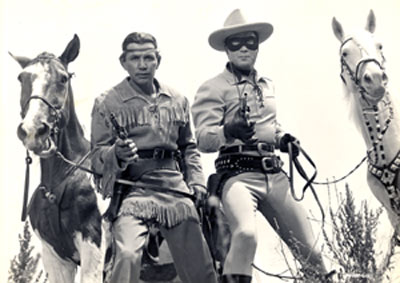
When I was a kid, “The Lone Ranger” (starring Clayton Moore and Jay Silverheels) aired in the afternoons after school, and I would try very hard never to miss a show. At least once per episode, the Lone Ranger would arrive just in time to save the day by shooting the gun out of the outlaw’s hand… at fifty yards… on horseback… at a full gallop. Yep, the Lone Ranger was my hero (along with Little Joe Cartwright, Matt Dillon, Paladin, Josh Randall [Steve McQueen in Wanted: Dead or Alive], and Chuck Connors [in both "The Rifleman” and “Branded”). I owned (in no particular order) a Lone Ranger six shooter (with a genuine silver plastic bullet), a Chuck Connors signature Rifleman rife (with the auto-cocking round lever) and the Steve McQueen sawed-off Winchester that you wore like a pistol (the coolest). I spent hours and hours pretending to be my heroes from the old west.

This next part you’re going to think I’m making up. As much as I played make-believe-cowboy-in-the-old-wild-west, I remember thinking how lucky I was not to have lived back then. Lucky not because I’d have to face bloodthirsty cut-throats and gunslingers with itchy trigger fingers (that would have been the good part). No, I was glad I didn't live in the old west because there weren't any real churches back then. I grew up believing that my church was the only true church... the only church that people would be going to heaven from. I was baptized at age 9, and I went to church three times a week every week for my entire life (so far). And I was taught that you just didn't go to church; you went to the right church—the one that said “Church of Christ” on the sign. Some that had the right sign didn't have the right church (because they had pianos).  If you weren't going to go to the right church, you might as well not go yo any church. That's why I was glad that I I didn't live on the Ponderosa.  They had churches in the old west, but none of them were the right church.  The true church.

I’m still glad I didn’t live in the old west (I’d be allergic to cut-throats and gunslingers). But that old monolithic view I had about “the true church” seems about as realistic to me now as the Lone Ranger shooting the gun out of the outlaw’s hand. Oh, I believe that there is a true church, one bought by the blood of Christ.  And because it is His, only He keeps the membership roster. You can’t tell "the true church" by a single set of doctrines or practices or organization principles. True churches are true because truly reflect the person and character of Jesus in their world. Granted, that’s a lot messier than just looking in the auditorium to see if they have a piano. It’s also messier because we will never fully arrive. We can become satisfied with our view of Calvinism or the millennium, but surely no one would ever think, “Well, we’re enough like Christ now.”
It is interesting that my religious tribe chose the moniker “Church of Christ.” Maybe we should stick to Him as “the mark of the true church.”

I’m constantly taught, entertained, challenged and annoyed by Experimental Theology, the blog of Dr. Richard Beck of ACU. His is actually one of four blogs that I check every day (in case you’re interested, the other 3 are by Patrick Mead, Roger Olson and Rachel Held Evans). I don’t always agree with everything Beck says; hey, sometimes I don’t have a clue what he’s saying!  But generally I take away something that is helpful. His blog yesterday was on creating a study guide on the Sermon on the Mount as a “condensed but comprehensive moral inventory.” If the Sermon on the Mount is a single-shot presentation of “moral vision of Jesus,” why not boil this down as our guide for living as true Christians. Beck does that—here’s my condensation summary of his condensation summary of Matthew 5--

  • Do not be egoistical or self-absorbed. (5:3)
  • Weep over the pain in this world.(5:4)
  • Be gentle, tender and kind. (5:5)
  • Try to be a better person. (5:6)
  • Show mercy to others. (5:7)
  • Be sincere, genuine and real. (5:8)
  • Work for the cause of peace. (5:9)
  • Other should see you’re different (5:13-16)
  • Let go of your anger toward others. (5:21-22)
  • Worship isn’t as important as relationships (5:23-24)
  • Try to resolve conflicts face to face. (5:25-26)
  • Do not sexually objectify others. (5:27-30)
  • Honor your marital vows. (5:31-32)
  • Live with integrity; be true to your word. (5:33-37)
  • Practice non-violence. (5:38-39)
  • Give and serve generously. (5:40-42)
  • Love your enemies and pray for them. (5:43-48)

Obviously, this won't answer every question one might ask about being a true disciple today (like whether or not your church should have a piano). But I fear there are many us who argue a lot over "the right church" who don’t seem to make much effort at these kinds of things at all. And maybe these are better reflections of the person and character of Christ (and thus more essential parts of being “Christian”) than all the particulars of how we conduct the church’s worship and work.

And I think these are things that could be worked on even in the old west even if the churches weren't exactly perfect in other ways.  So maybe me and Little Joe would have been able to hang out together after all.

Thursday, May 24, 2012

Catacombs and Cathedrals

Russell Moore writes an interesting piece in The Christian Post entitled “Catacomb Christianity and Cathedral Christianity.” As we writes, Moore is in Rome leading a seminary study tour, and there are indeed a few things in Rome to study and tour that relate to early Christianity. In Rome there are great edifices built to celebrate and proclaim the Christian faith (like the Saint John Lateran Cathedral) and there are the ruins of the ancient catacombs where earlier Christians worshiped during the dark days of Roman persecution. The catacombs and the cathedrals, says Moore, remind us of the paradoxical ways in which God works to show us His grace. The catacombs remind us of the desperate faith of our persecuted ancestors that lived and grew in the valley of the shadow of death. The cathedrals remind us that that ancient faith not only survived and thrived, it far outlasted the powerful forces that were so marshaled against it.

Moore suggests that the catacombs and the cathedrals remind us of two very important truths—“God's sovereignty in sending down the faith, and the frailty of humanity as stewards of that faith.” Those dual truths of God’s power and our frailty has been the history of the church from the very beginning, and that continues to be story of the church today. Moore writes--
We can't romanticize the early persecuted church. After all, the New Testament Scriptures are often rebuking those churches for precisely the things we see going on in our churches today: division, carnality, immorality, arrogance (1 Cor. 4:7-13, 5:1-8, 6:1-8). And, if Christianity had remained in the catacombs, it is quite possible that you and I would have never encountered Christ.
The basilica at Saint John Lateran was planted there by the Emperor Constantine. His vision of a Christian empire was, of course, a failed experiment that led to persecution and all sorts of nominal Christianity. And yet, God used Constantine to end a bloody persecution and to, among other things, call together the church to deal with a deadly heresy or two. In the providence of God, the Trinitarian theism by which I critique the idea of Christian empire came down to me due, in part, to the unwitting actions of the prototypical Christian emperor.
Moore warns us that if we see only the catacombs, then we might glamorize smallness in and of itself and thus make impotence equivalent to faith and holiness. If we do that, then we may excuse our inability to make any impact in the world around us. But if we only see the cathedrals, then we might tend to identify godliness with size, success, influence and power.  We need to see God at work in both the catacombs and the cathedral… and we also need to see the fragility of human weakness at work in both. Moore ends his article with this reminder—
The kingdom of God is vast and tiny, universal and exclusive. Our story is that of a little flock and of an army awesome with banners. It's a Christianity of persecution and proliferation, of catacombs and cathedrals.

Thursday, May 17, 2012

Irreconcilable Differences

Lynn and I are mourning a loss this week as we watch the last of 48 episodes of the TV series “Lie to Me.” We never watched it when it was on TV (and had commercials), but we found it on Netflix and we both enjoyed it. And that’s rare. Because when it comes to TV shows and movies, Lynn and I have irreconcilable differences. We just don’t really like the same things—she likes slow-moving, dialogue-driven, relationship-focused, soap-opera chick-flicks. I like stuff that blows up… and sports. (Remember the old movie “Black Sunday” where terrorists plant a bomb at the Super Bowl? That was cool!).  We have irreconcilable differences.  We also don’t like the same foods (and therefore restaurants). So we have to spend days in negotiation before we can go out on a “dinner-and-a-movie” date.

We don't just have differences; we have irreconcilable differences! So why did we get married? Fortunately, one of the things that we do have in common is enjoying the Pepperdine Lectures... and one of the things we learned there this year is that 69% of all marital disputes are irreconcilable. Almost 70% of the things couples disagree over in their marriages cannot be effectively resolved... ever.  So how does anyone stay married? We learn to live with and even celebrate our differences. Notice this except from
an article by Diane Sollee.
The number one predictor of divorce is the habitual avoidance of conflict. What's sad is the reason couples avoid conflict is because they believe it causes divorce…In the beginning, we avoid conflict because we are in love and we believe that "staying in love" is about agreeing, about NOT fighting. We're afraid that if we disagree – or fight – we'll run our marriage off into the ditch. We believe that if we've found our soulmate, we'll agree about most things - and certainly about the important things. Later, we avoid conflict because when we try to deal with our differences things get so out of hand and our fights so destructive and upsetting that we simply shut down. After a few bad blow-ups we become determined to avoid conflict at any cost. And, we start wondering if we married the wrong person. It shouldn't be this hard.

Successful couples are those who know how to discuss their differences in ways that actually strengthen their relationship and improve intimacy. Successful couples know how to contain their disagreements – how to keep them from spilling over and contaminating the rest of their relationship. Couples need to know what the research has found: that every happy, successful couple has approximately ten areas of "incompatibility" or disagreement that they will never resolve. Instead, the successful couples learn how to manage the disagreements and live life "around" them– to love in spite of their areas of difference, and to develop understanding and empathy for their partner's positions.

The divorce courts have it all wrong. "Irreconcilable differences" are not a reason to divorce. Instead, they are part of every good marriage. Successful couples learn to dance in spite of their differences. They gain comfort in knowing they know their partner, know which issues they disagree on and must learn to manage. They also understand that if they switch partners they'll just get ten new areas of disagreement, and sadly, the most destructive will be about the children from their earlier relationships.
Marriage isn't easy; nothing that is worthwhile is ever easy.  I used to think that one of the secrets of a good marriage is learning to say no to self, to overcome our selfishness and to learn to the other before myself.  Now I suspect that's not just the secret to marriage... it's the purpose of marriage.  God gives us marriage to teach us how to become less selfish and more like Him.

Tuesday, May 15, 2012

President Obama, Gay Marriage and the Church

Over lunch Sunday (ironically Mother’s Day lunch which Lynn prepared for us), Angelynn asked me what I thought about the whole issue of homosexual marriage. The announcement Thursday of President Obama coming out (no pun intended) in support of homosexual marriage brought the topic up, but this was something she had been thinking about for some time. “So Dad, what do you think about homosexual marriage?” My immediately response was to make a joke, “Uh… you don’t have a girlfriend I don’t know about, do you?” She was serious, but I tend to make jokes when I’m uncomfortable. This is something that I’ve been thinking about a lot about as well, and I’ve started twice in the last week or so to write something on the blog about it. So here my daughter is calling me out on it. What do I think about homosexual marriage?

I wish I could remember exactly how Angelynn asked the question, but I think it was something like this—“I think homosexuality is wrong, but I don’t want to come across as harsh and condemning either.” Well, that's what I think!  To be honest, I was a bit uncomfortable with her question. Why? Because Kati, our token Democrat, feminist friend was there waiting to hear my answer?  Not really.  What made me uncomfortable was that as "The Preacher" I feel a bit of pressure to have a fully-formed, consistent and coherent position on issues like this. And on this one, all I have is an in-process, inconsistent and incoherent position. So here goes.

I believe homosexuality is a sin. I believe that the consistent witness in scripture is to portray homosexuality as inconsistent with God’s original design for human sexuality. In the beginning God both made humankind in His image and likeness and He made them male and female (Gen 1:27). When Jesus was asked about marriage and divorce, he began with this statement that God made humans male and female (So no, Jesus never mentions homosexuality per se, but he does mention the “male and female” starting point for marriage). Homosexuality is condemned along with incest and bestiality as forbidden sexual practice in Leviticus. Sure, there is a lot of other stuff condemned as well (like sex during and a week following the menstrual cycle), so Leviticus is definitely not the final word. But it is part of a consistent Biblical position. Paul uses homosexuality as his “exhibit A” in the sinfulness of the Roman world that denied God (Rom 1:26-27), but he expands his list of exhibits to include greed, gossip, God-hating and a host of other things that no one is seeking constitutional amendments to ban. When Paul lists sins that keep people from inheriting the kingdom of God, homosexuality is listed (1 Cor. 6:9). Again, this list also includes adulterers and alcohol abusers (nobody in Congress is going to introduce a bill banning that or they would have trouble raising a quorum to vote on the thing!). As someone who believes that the Bible is binding and that it should be interpreted, if not always literally, at least seriously and consistently, I believe that homosexuality is a sin. And I believe that it is the job of the church to discourage people from sinning. So I’m not drinking the cultural Kool-Aid that wants everyone to accept that “Gay is OK.”

At the same time (take a deep breath here), while homosexuality is a sin, it is only a sin. It is not the worst of all possible sins. I’m not sure what that would be, maybe pride (because pride is at the root of most other sins). But some of us (“us” being Christian heterosexuals) may think that homosexuality really is the worst of all sins because we have such a visceral revulsion (the “Yuck Factor”) when we think of two men having sex together.  Here's what I think-- unless and until we can generate that same revulsion and disgust when we contemplate “sexual immorality, impurity and debauchery; idolatry and witchcraft; hatred, discord, jealousy, fits of rage, selfish ambition, dissensions, factions and envy; drunkenness, orgies, and the like” (Gal 5:19-21), then maybe the moral outrage and repugnance that we feel toward homosexuality is more akin to homophobia (of which we are often accused) than we like to admit! I’m not saying that we should learn to accept homosexuality; I’m saying that we should have the same moral outrage when confronted by all sin rather than saving it up for just this one.  I'm just saying.

The text that comes to mind when I think of the gay marriage issue is not in Leviticus, Romans or Galatians—it’s 1 Corinthians 5:9-12. You might think, “But Paul’s list of sins there doesn’t even mention homosexuality.” He mentions a list of sins that Christians are to oppose, and homosexuality would be included her under the umbrella of “sexual immorality” (a pretty big umbrella to be sure). Where this text touches the current discussion on the church’s response to homosexual marriage is in Paul’s command “not at all meaning the people of this world” (5:10) and “What business is it of mine to judge those outside the church” (5:12).  Getting all wrapped around the axle over political issues that seek to govern those outside of Christ by using the law of Christ seems to miss Paul’s point here completely. Remember, Satan is the one who holds power over the kingdoms of the world, even our own (see Matt 4:8-9). The job of the church is to oppose the work of Satan, not with signs or wisdom, but by preaching Christ crucified (1 Cor. 1:20-25). Politics is ultimately about power, and power is the ploy of the kingdom of the world, not the kingdom of God (see Matt 20:26-27).  We are called to serve the world in the name of Jesus, not to rule over it.

There is a lot more that could be said and that I intended to say.  Rather than me sating it, let me point you to a very well written blog by Dan Bouchelle that sums up pretty well what I think.  I really recommend you click over and read what Dan says. I don’t agree with everything that he says… but then I don’t agree with everything I say either. He ends his blog with a list of “few things I’d like to say to conservative Christians in general and preachers specifically” before we respond to President Obama’s announcement of his support of gay marriage. I’ll end with his (edited and abbreviated) list just to whet your appetite (and encourage you to read the whole article).
  1. Before you talk about homosexuality you really should get to know and love several people with same sex attraction. This will keep you from painting with a broad brush about “them” and will change the tone of what you say to something more Christ-like.

  2. Please don’t talk as if homosexuals have made a conscious choice about their orientation and just decided they would rather be gay. It’s a little more complicated than that.

  3. Please put this issue in perspective with other behaviors and desires that heterosexuals battle. If you give people a pass on sins like greed, bitterness, envy, gossip, or dissention while you vilify “those homosexuals,” you are being hypocritical. If you are going to work out of Romans 1, look over Paul’s whole list of sins and treat them all with equal seriousness.

  4. Please do not equate the gang-rape of ancient Sodom with genuinely caring same sex relationships today. I’m not saying either is good. I’m saying they are not comparable.

  5. Please do not talk as if same sex relationships cannot ever be loving or fulfilling. Not all homosexual relationships are shallow and lustful.

  6. Encourage your church to love and welcome people with same sex attraction. The way we deal with homosexuals needs to communicate God’s love not our hate. This won’t be easy; most churches are not prepared to welcome people with same sex attraction.

  7. If you are going to require people with same sex attraction to live celibate lives (which is appropriate), are you also willing to provide them the kind of loving community that will keep their lives from being unbearably lonely? The church that takes a stand against homosexuality has a responsibility to provide a higher form of love to those it asks to leave the gay life.

  8. Please do not talk as if people who do not believe in the Christian God, do not trust the scriptures, and who do not follow Jesus should be compelled by law to support Christian values. The world won’t be won to Christ through politics or power but by the gospel of sacrificial love.

  9. Do not let the vacillating winds of public opinion determine the position you take. This is not about being fashionable; it is about speaking the truth in love and helping people mature into the fullness of Christ.
I know this blog will be unpopular (this is when it's good to have a readership of only 2-3).  This is one of those polarizing issues that people tend to see only in extremes, and on this one issue anyway, I'm not very extreme (which may be too extreme). I feel strongly both ways.  I believe that homosexuality is wrong. I believe that God loves homosexuals. Thus I believe that the church must love homosexuals. And I believe that up to this point, we're doing it wrong.

Monday, May 14, 2012

On Heat and Light

When I was in grad school, I wound being part of a team that went to another to debate a Baptist preacher on the subject of baptism. OK, so my part on the "team" was to flip overhead transparencies as they were called for; there were over 300 charts prepared in advance and many more were created ans the debate progressed, so this was little job. And I was also permitted to sit in on the strategy sessions for each night's debate... provided that I kept very quiet.

To say that this debate was acrimonious would be an understatement. Almost from the get go, there were interruptions from the time-keepers, points of order objections from the moderators and general one-ups-manship from everyone as both sides tried to win points and make the other side look foolish and uninformed. Things got very ugly and very loud very quickly. At one point, one of the overhead charts (that I flipped very professionally) read, "My opponent has said…" and then quoted him on the chart. Immediately there was a thundering "Point of order" objection as our opponent’s moderator (which seemed to function more like the "second" in a duel, except with more attitude) demanded to know the source of the quotation. On the chart, the statement was enclosed in quotation marks indicating a direct quotation, so they wanted to know the citation details. Of course, this was completely disingenuous; what they wanted was to interrupt the flow of the speech and win a few points. So we had to find a citation for the quote.

The next day, our "team" spent some time listening to the tapes of the previous night's debate, and we found a place where they guy made the statement… sorta.  The only problem was that he wasn’t actually saying what we had said he that he had said. In fact, he was really saying just the opposite. But if we started the quote late and stopped it early, then it appeared that he said what we needed him to say. So the plan was to dub the statement to a fresh tape and play it that night, proving that we were right and he was wrong. And thus we could exclaim, to borrow a quote from the old Lady Godiva story, “Horary for our side!”

It was at this point that I made my only contribution to the discussion in this planning (or was it plotting) session. I said verrrry tentatively, "But that’s not really what he is saying, is it?" They were taking the guy totally out of context, and I naively and innocently thought that somehow mattered. Well, you would have thought that I had started speaking in tongues! They glared at me for several seconds and didn’t say a word. And then they went back to dubbing there tape. And I never opened my mouth for the rest of the debate trip.

I learned a powerful lesson that day. The point of religious argument is the exact same point as in political argument, legal argument, marital argument and every other kind of argument there is—the point is to WIN, period. Truth, honesty and integrity are more casualties of war than they are the point of the discussion. Sure, it doesn’t have to be that way, but sadly it that way more often than not (at least in my experience).  The point of any argument is to win... and all is fair in love and war and argument.

So what’s the point of my trip down memory lane? Maybe I don’t have one. Or maybe I’m just reminding myself that the heat of debate usually has very little to do with the light of truth. I think that’s a good thing to reminder every now and again.

Tuesday, May 08, 2012

Be Careful What You Wish For

There's an old saying that warns us, "Be careful what you wish for… you might just get it." Israel is about to learn this lesson the hard way in our reading today from 1 Samuel 8. Here the Israelites begin to pester Samuel to give them a king. On the surface, their request seems to be a legitimate one. Samuel became judge after the abject failure of Eli's sons to take over as priest and judge in their father’s place. Samuel was called by God to lead Israel as judge, but now as he gets older, there are two failures that he has to face.

  • First, Samuel appointed his sons Joel and Abijah as leaders after him, but they were colossal failures as leaders as had Eli’s sons been a generation before. “They turned aside after dishonest gain and accepted bribes and perverted justice” (1 Sam 8:3). Israel saw a “second verse, same as the first” deal brewing with Samuels sons, and they weren’t interested.
  • Second, Samuel had basically failed at being a judge. OK, Samuel was a godly and faithful man, and the failure really wasn't his fault. But the job of a judge in Judges was to destroy the foreign power oppressing Israel, and Samuel hadn't totally broken the Philistine threat (though he did put a world of hurt on them in 1 Samuel 7).

So the people of Israel saw the worthlessness of Samuel’s sons as leaders and the continued threat from the Philistines, and they came up with a solution, "You are old, and your sons do not follow your ways; now appoint a king to lead z us, such as all the other nations have" (1 Sam. 8:5). I’m not sure the real point is that Israel wanted to be fashionable like others nations and have a king. It was more that they thought that a strong central king was the answer to protecting them from Philistia and other foreign invaders. That is why God told Samuel, "It is not you they have rejected, but they have rejected me as their king" (1 Sam 8:7). They weren't willing to trust God to protect them; they rather put their trust in a stronger national government with a king and standing army (see 1 Sam 8:19-20).

Samuel gives Israel this warning from God, “Be careful what you wish for.” You know how parents warn their kids who want a puppy about hard it is to care for and feed and clean up after a pet? Well, God warns Israel that kings are a lot more trouble than they are worth

  • The king will take your children and plow them into his war machine (8:11-13)
  • The king will tax you until all of your stuff belongs to him (8:14-17)
  • And kings are a lot easier to get than they are to get rid of (8:18)

Be careful what you wish for. But where did Israel get the idea that they should have a king? From the nations around them? Maybe. But maybe they also read the Bible. Ultimately the king was God’s idea and he gave instructions on the care and feeding of a king way back in Deuteronomy 17:14-20. The instructions about kings here are pretty similar to the warnings God gives in 1 Samuel 8. Do the idea of Israel having a king was God’s idea.

The problem was that Israel would not wait on God’s timing. The way this story is going to work out is that Israel insists on a king and God gives them Saul who turns out to be a huge disappointment. After Saul’s death, God raises up David, the man after God’s own heart and the precursor to the Messianic king who would come after him. In other words, God had David waiting in the wings all the time but Israel was not willing to trust Him and wait on God’s timing.

We aren't any better at waiting on God's timing than was Israel.  Sure, we know about "those that wait upon the Lord" and all that stuff about eagles wings.  But we want what we want when we want it.  We're people who, like Joan Rivers observes, stand in front the microwave yelling, "Hurry!"  We don't wait well.  God interpreted Israel's unwillingness to wait and trust in him as " they have rejected me as their king."  I wonder if that is how He views our impatience today?

Wednesday, May 02, 2012

The Downward Spiral (Part 2)

The book of Judges is organized around a cycle of apostasy and repentance that is repeated seven times in the book. The details change, but the cycle is the same.

  1. Israel enjoys a period of prosperity and peace.
  2. Israel leaves God to worship the false pagan gods.
  3. God allows Israel to be enslaved by a pagan enemy.
  4. Israel repents and turns back to God.
  5. God raises up a judge to overthrows the oppressor.

And then the cycle repeats itself-- freedom-to-apostasy-to-repentance-to freedom. Whether its the Philistines or Mesopotamians, Othneil or Gideon-- the story is basically the same.

That is until you get to our reading for the next several days, Judges 17-21. Here the story changes completely. You don’t have any judges or foreign oppressors. What you have is several very bizarre events that took place during the time of Judges but which have nothing to do with the message of the book. Actually, on closer inspection, these bizarre stories are precisely what the book of Judges is all about.

As you skim through this section of Judges, one phrase keeps jumping out at you. It appears four times in five chapters, too striking to be coincidence. You just have to think that this phrase is the organizing principle of these chapters:
  • Judges 17:6- "In those days Israel had no king; everyone did as he saw fit."
  • Judges 18:1- "In those days Israel had no king."
  • Judges 19:1- "In those days Israel had no king."
  • Judges 21:25- "In those days Israel had no king; everyone did as he saw fit."
Why does the author keep saying this over and over? Well, he seems to really, really want is to get it that Israel had no king. There was no authority, no one to enforce a universal code of behavior. The result was a moral relativism where everyone did as they saw fit.

There are three basic stories told to us in these five chapters. All three are introduced by the expression, “In those days Israel had no king.” All three show in broader and broader brush stoke just how depraved things got because: first, Israel had no central authority and second, everyone did as they saw fit.

  • The first story is of a man named Micah who builds for himself an idol god. He then sets up his own priesthood and establishes his own center of worship to this false god. All of this was, of course, in direct violation of the law of Moses.
  • The second story is of a group of Danites who basically become dissatisfied with the inheritance in Canaan and scout out for themselves new territory in the mountains of Laish. And in the process of doing, they stole both Micah’s new gods and his new priest. So now Dan lives in a land not given them by God and worshipping in a way not commanded by God.
  • The third story is of the rape and murder of the concubine of a Levite, the refusal of the men of Benjamin to hand over the perpetrators and the resulting civil war that all but destroyed the tribe of Benjamin.

It just gets weirder and weirder. These stories tell of a downward spiral among Israel caused by people who did as they saw fit. If you don’t respect a centralized ethical system, then you end up making your own gods, being dissatisfied with the inheritance given you by God, you rape and murder and then go to war with your brothers. That’s what happens when men direct their own ethical steps. That’s what happens when human beings fail to recognize the King of heaven as the master of morality.

Seems like there should be an application somewhere here for us.  It's just fortunate that we don't live in a time and place where everyone does as they see fit!

Friday, April 27, 2012

Peace in Our Time

In September 1938, Hitler was preparing his war machine to invade Czechoslovakia while Britain and France were committed to protecting Czech sovereignty. It seemed that war was inevitable, but Neville Chamberlain, the British prime minister, flew to Berlin for peace negotiations. The personality of Hitler and the fear of war caused Chamberlain to cave in. On September 21, 1938, the ambassadors of France and Great Britain informed the Czech premier that their countries would not honor their treaty obligations. On September 29, 1938, England, France, Germany and Italy signed the Munich Pact, which granted Hitler the northern part of Czechoslovakia.

Chamberlain returned to London declaring "peace in our time." He was hailed as a hero by a country that thought that he had averted war. But one man was not fooled. Winston Churchill rose in the House of Commons to speak these profound and prophetic words:
Britain and France had to choose between war and dishonor. They chose dishonor. They will have war...And do not suppose that this is the end. This is only the beginning of the reckoning. This is only the first sip, the first foretaste of a bitter cup which will be proffered to us year by year unless, by a supreme recovery of moral health and martial vigor, we arise again and take our stand for freedom as in the olden times.
Churchill recognized something that most of his countryman did not-- you simply cannot compromise with evil. Such compromise is defeat. When we compromise with evil, we are inevitably led down a path of decline and decay.  History proved Churchill to be right.

In Judges 9, Israel is once again plunged into chaos and conflict, but this time it is not from a marauding band of invaders. The chaos this time was caused by the man who would be king.  He name was Abimelech, the son of Gideon. Abimelech murdered the seventy sons of Gideon to remove any other claim to the throne, a throne that did not exist. He then plunged the country into a civil war in an effort to consolidate his power. Thousands died in the conflict, and many more would have had not Abimelech been killed by the old "throw-the-millstone-out-the-tower-window" trick. Judges is a book that chronicles many dark times in Israel's past, and the reign of Abimelech was one of the darkest.

The conflict of Abimelech that nearly destroyed the land began when his father Gideon made one of those  Chamberlain "peace in our time" pronouncements.  In Judges 8, Gideon receives payments in gold for his great service in leading Israel to freedom. He fashioned the gold into a golden ephod, a breastplate worn by the priest to symbolize their authority. So this golden ephod represented his authority, but very quickly it became a object of veneration and even worship. Gideon, the judge who began his career by destroying images of Baal in effect himself sets up an idol for Israel to worship. Shortly after his death, Israel completed the apostasy by setting up images of Baal. By making peace with idolatry, Gideon set the stage for the conflict that would destroy his sons and the peace in Israel he fought so hard to maintain.

We are today in a spiritual battle that has eternal consequences. When we make subtle (or not so subtle) compromises with the values and standards of the world around us, then we set the stage for same kind of spiritual compromise and failure precipitated by Gideon. When we blindly accept the ideas and ideals of the culture around us, we make peace with the world-- a peace that cannot last. There is no peace in our time except the peace that passes understanding that comes from a life that is hidden with Christ. May God give us the courage to stand for Him in an age that stands for everything else... and thus falls for anything.